
“Small Interventions, Big Impact”
Vision
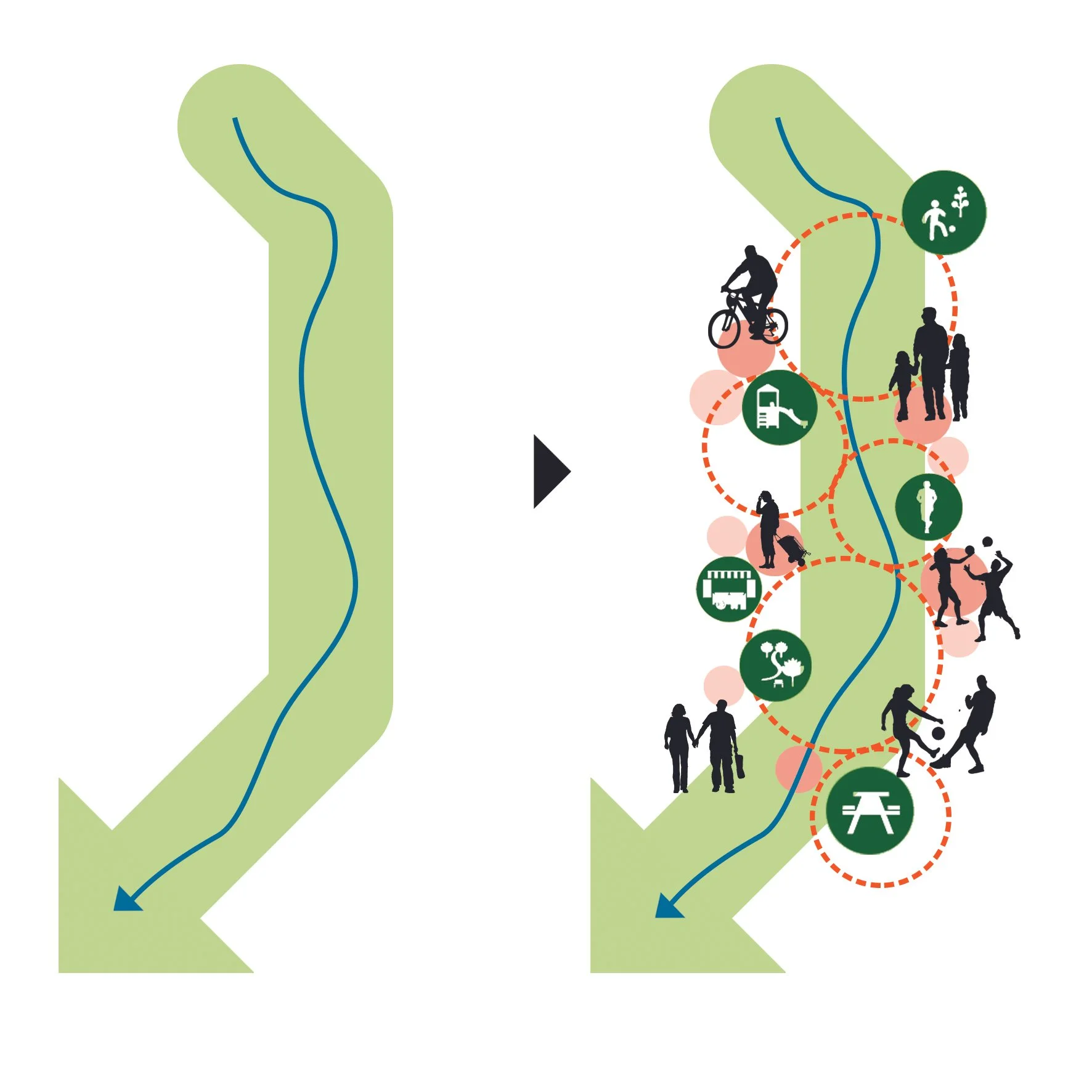
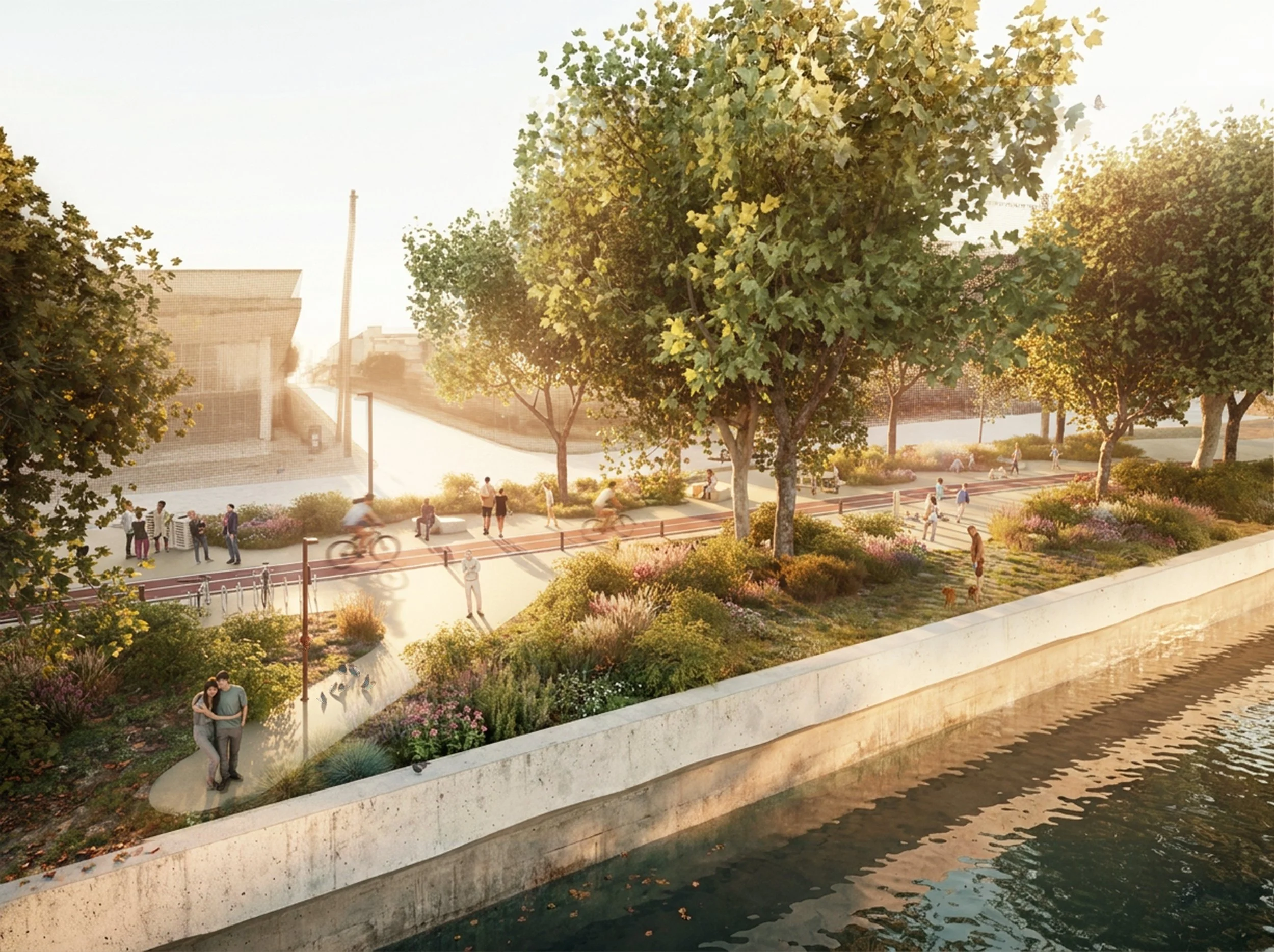
The proposal aims to create a multifunctional and participatory public space, centered on the activation of the local community. The riverside zone is transformed into a vibrant destination that promotes recreation, social interaction, and a sense of belonging through a series of subtle and carefully considered interventions.
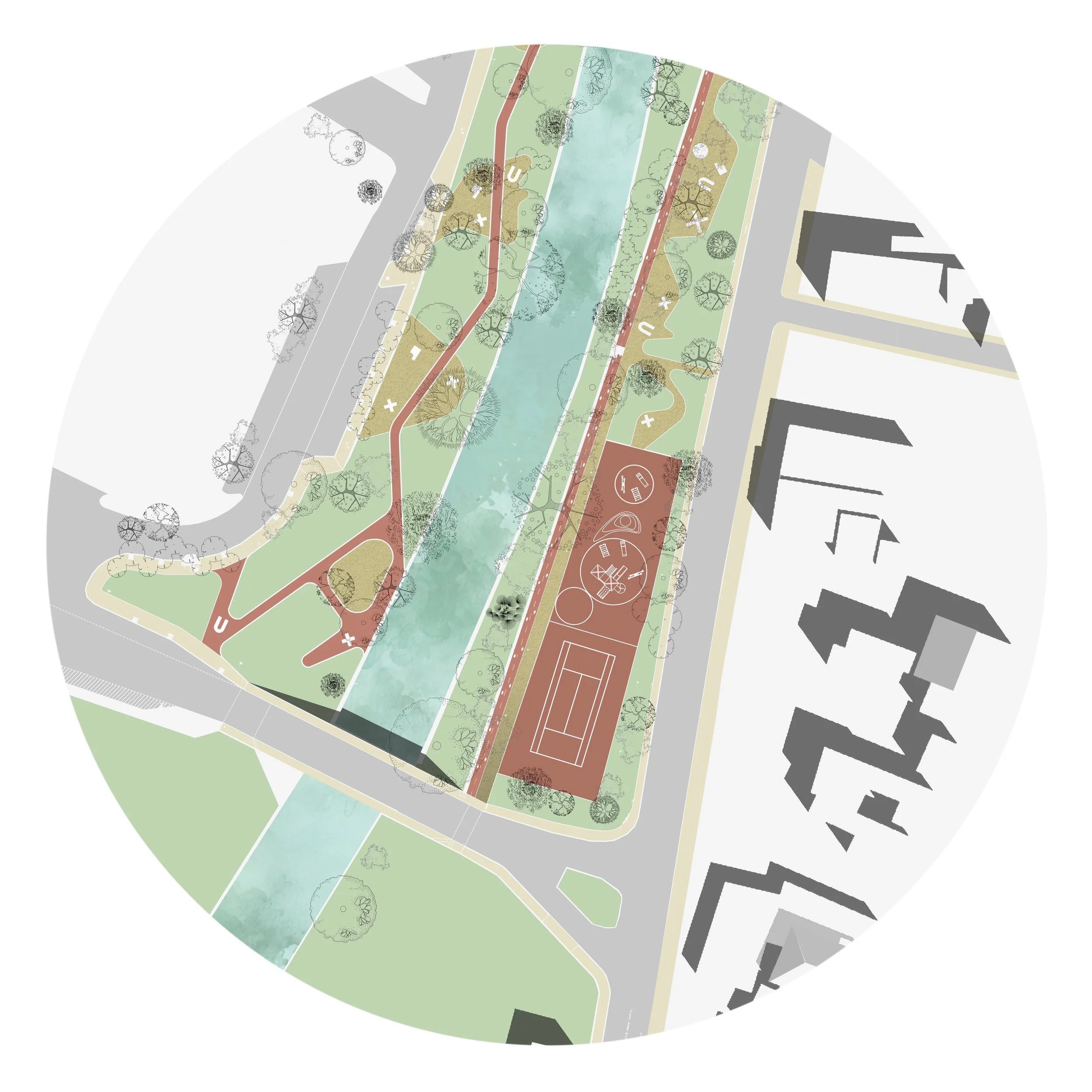
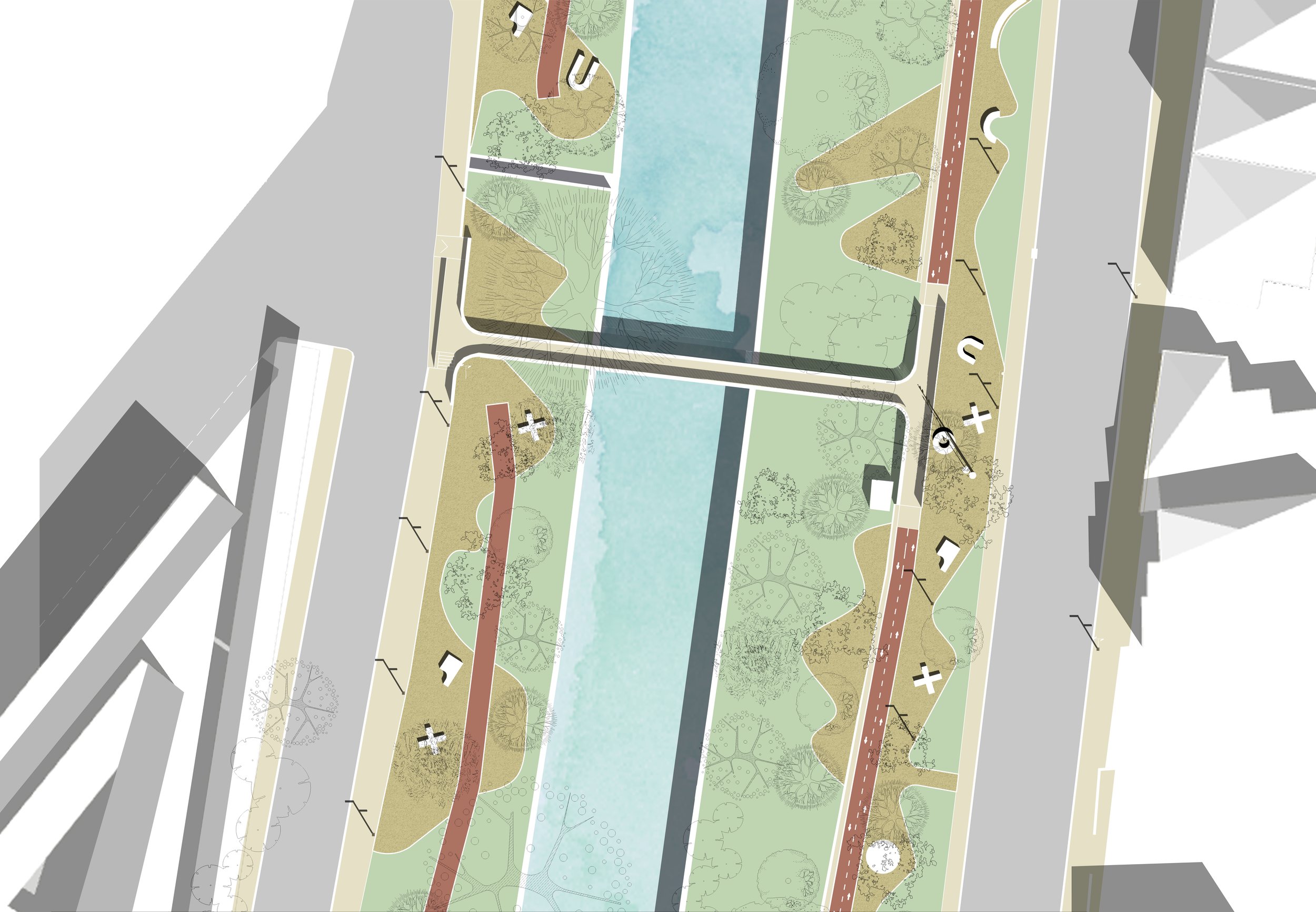
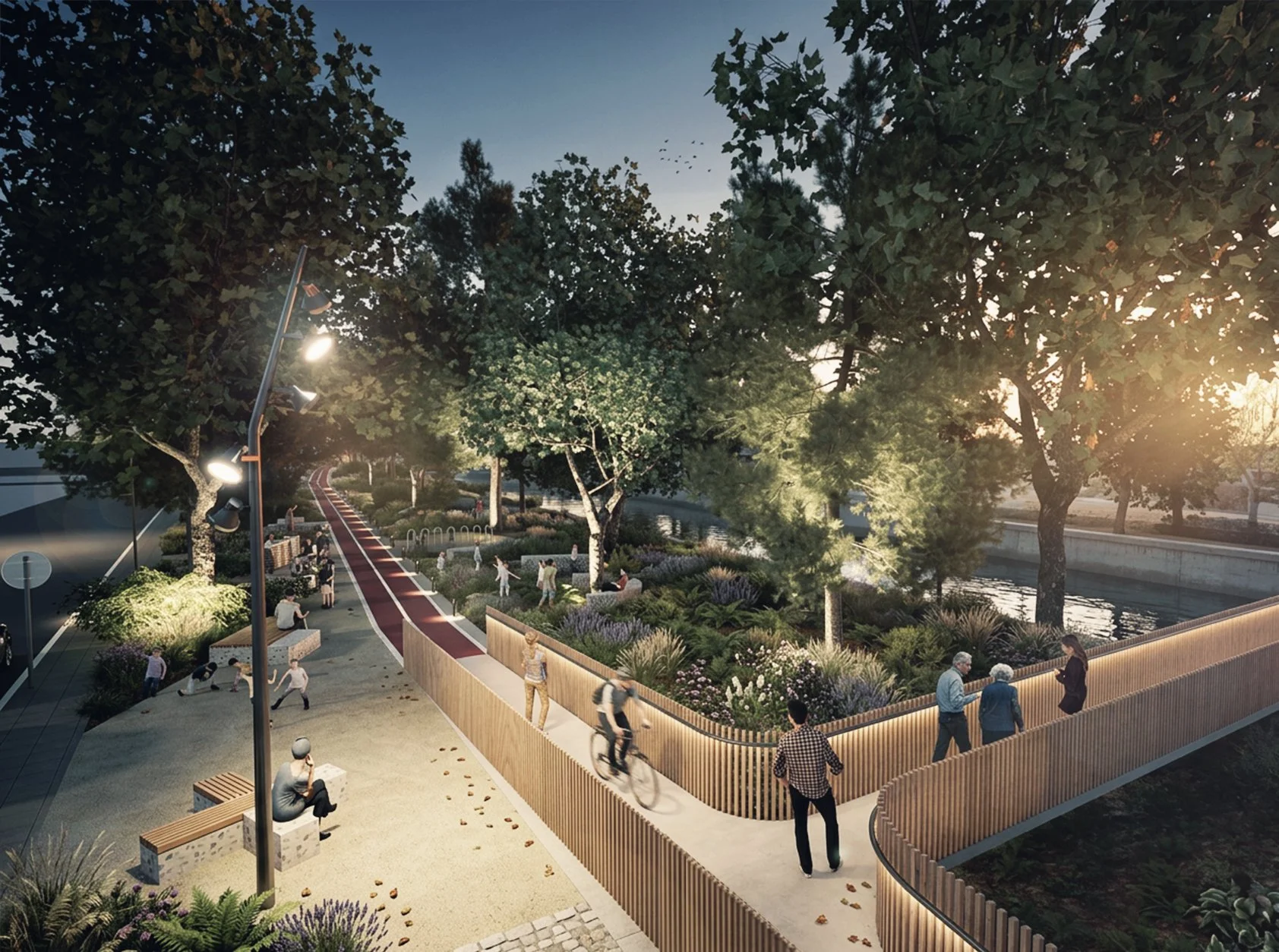
Within this framework, a range of activities is proposed, including cultural events, festivals, and temporary installations that will act as catalysts, showcasing the area's potential and enhancing its attractiveness. Through these low-impact interventions, the river acquires a renewed identity and visibility, becoming a central element of the urban experience. At the same time, a network of pedestrian paths and a 630-meter-long two-way cycle route connecting the northern and southern sections of the site forms a key sustainable mobility corridor, ensuring accessibility and the seamless integration of the riverside area into the urban fabric and daily life of the city.
The proposal embraces contemporary bioclimatic design principles and sustainability-driven strategies, aiming to create resilient and environmentally sensitive interventions. Sustainability is approached holistically, linking ecology with social cohesion and culture, extending beyond the conventional boundaries of energy efficiency. Strategies such as the enrichment of local flora with native species, the enhancement of biodiversity, and the use of cool and permeable materials address climate change challenges and flood resilience. Furthermore, an emphasis on circular economy principles and resource reuse minimizes the environmental footprint of the project. The proposal transforms public space into a dynamic platform for environmental education, social interaction, and cultural development, turning the river into a living organism that evolves organically alongside the city and its inhabitants.
Design Principles and Materials
The proposal is guided by three fundamental design principles:
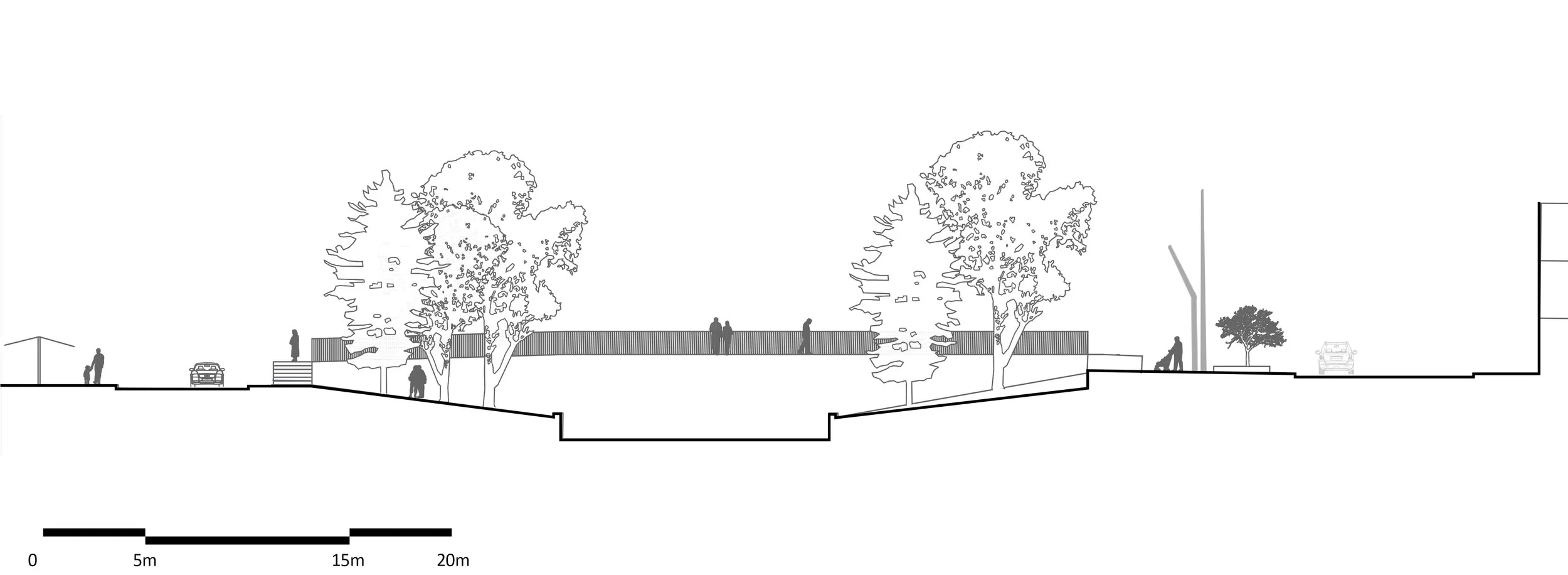
A. The creation of pedestrian and cycling routes, complemented by a series of organically shaped resting points along the river. These alignments are carefully designed to respond to the natural topography of the riverbank while respecting existing trees and landscape features. The renovation of the existing pedestrian bridge is also proposed.
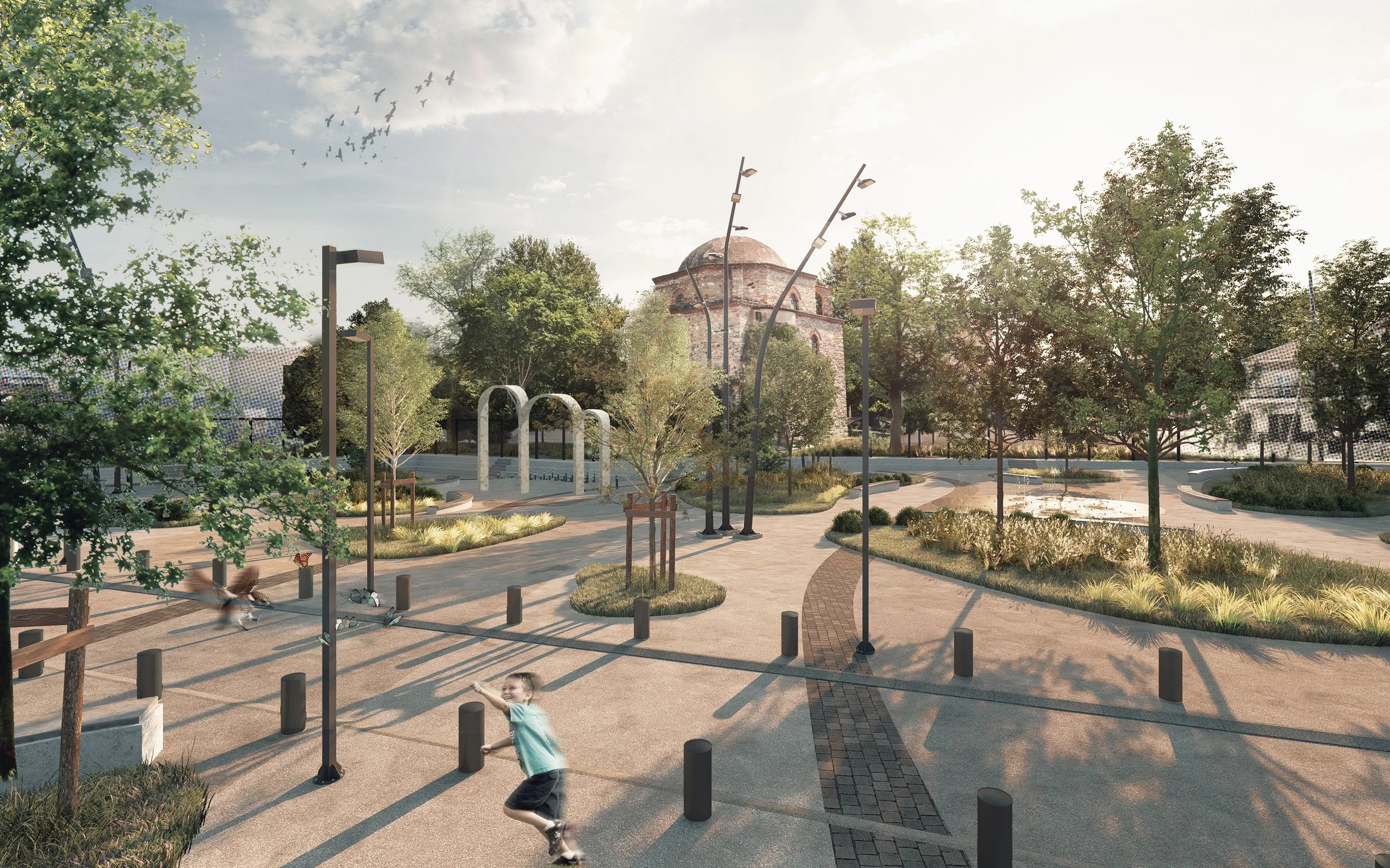
B. The design of urban furniture inspired by the landmarks, history, and unique characteristics of the area. The composition creatively reinterprets geometric forms such as arches, circles, and crosses, transforming them into contemporary elements of public infrastructure and spatial identity.
C. The use of a limited palette of materials and colours ensures a coherent, legible, subtle, and cost-effective design language.
The organic design of the pathways and urban furniture draws inspiration from the natural landscape, history, and cultural heritage of Elassona, incorporating references to the area's most significant landmarks. The form and materiality of the proposed structures reinterpret, in a contemporary architectural language, textures and elements found throughout the local urban fabric—from the Monastery and the Ottoman Mosque to the historic arched bridge and traditional entrance gates.
At the same time, materials such as gabions, stone pavers, exposed aggregate concrete, and cast concrete have been selected for their durability and resilience against weather conditions and flooding events. Their use, combined with the incorporation of locally sourced materials, ensures the harmonious integration of the interventions into the riverside ecosystem while maintaining a strong connection with the area's natural character.
Client
Competition
Year
2025
Project Team
Dimitrios Grozopoulos, Ioanna Papakonstantinou-Brati
3D Visualisation: Dimitrios Grozopoulos, Michalis Polymenidis